Tak for Mad Web App
Group Project
Quick Info
13 April 2024
Deni Kalenski, Mila Hristova, Beatrise Jaunite, Consuelo Favero
Project Description
The purpose of this project is to delve into the strategic framework aimed at ameliorating the prevailing food waste dilemma in Denmark through the innovative interventions proposed by Quick Info. Initial success was achieved through the implementation of the "Ja, tak" social media post-response robot, which substantially curbed food waste in Danish supermarkets.
Building upon this accomplishment, Quick Info is now directing its efforts towards augmenting the "Quick Sale" web application with novel features tailored to combat food waste, while staying independent of third parties.
The main points around which the whole project will be revolving around are reducing food waste in the supermarket sector, creating independence from third parties, and strengthening the relationship between local communities and their COOP’s 365discount stores.
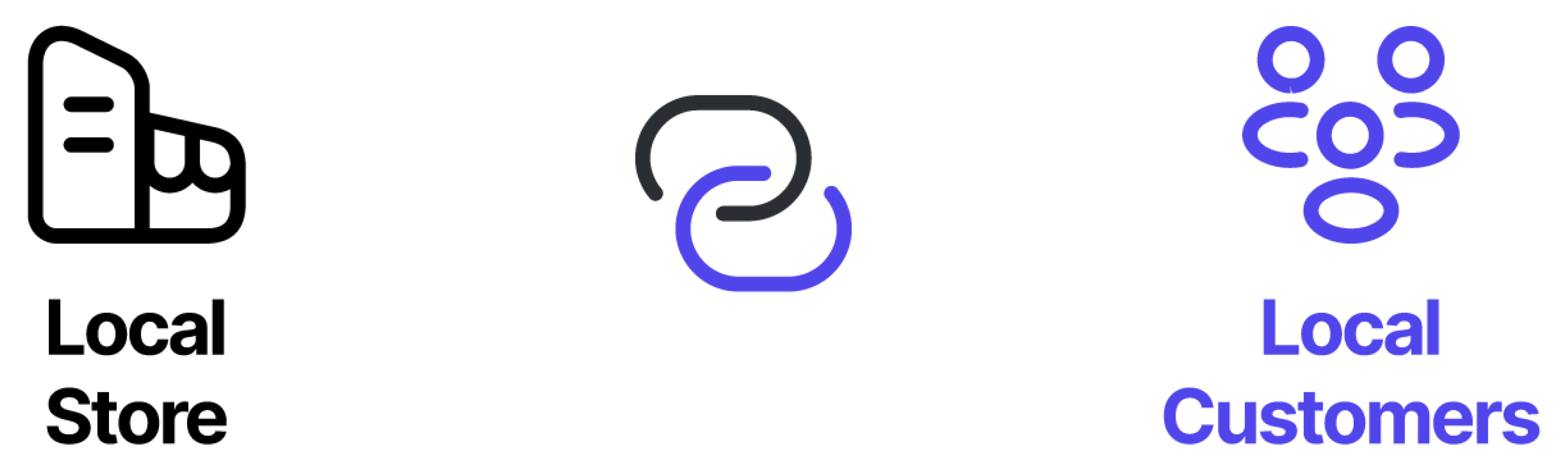
How can Quick Info remove third parties between COOP’s local stores (365discount in particular) and their customers in Aarhus, and build loyalty by engaging with the local communities?
The process
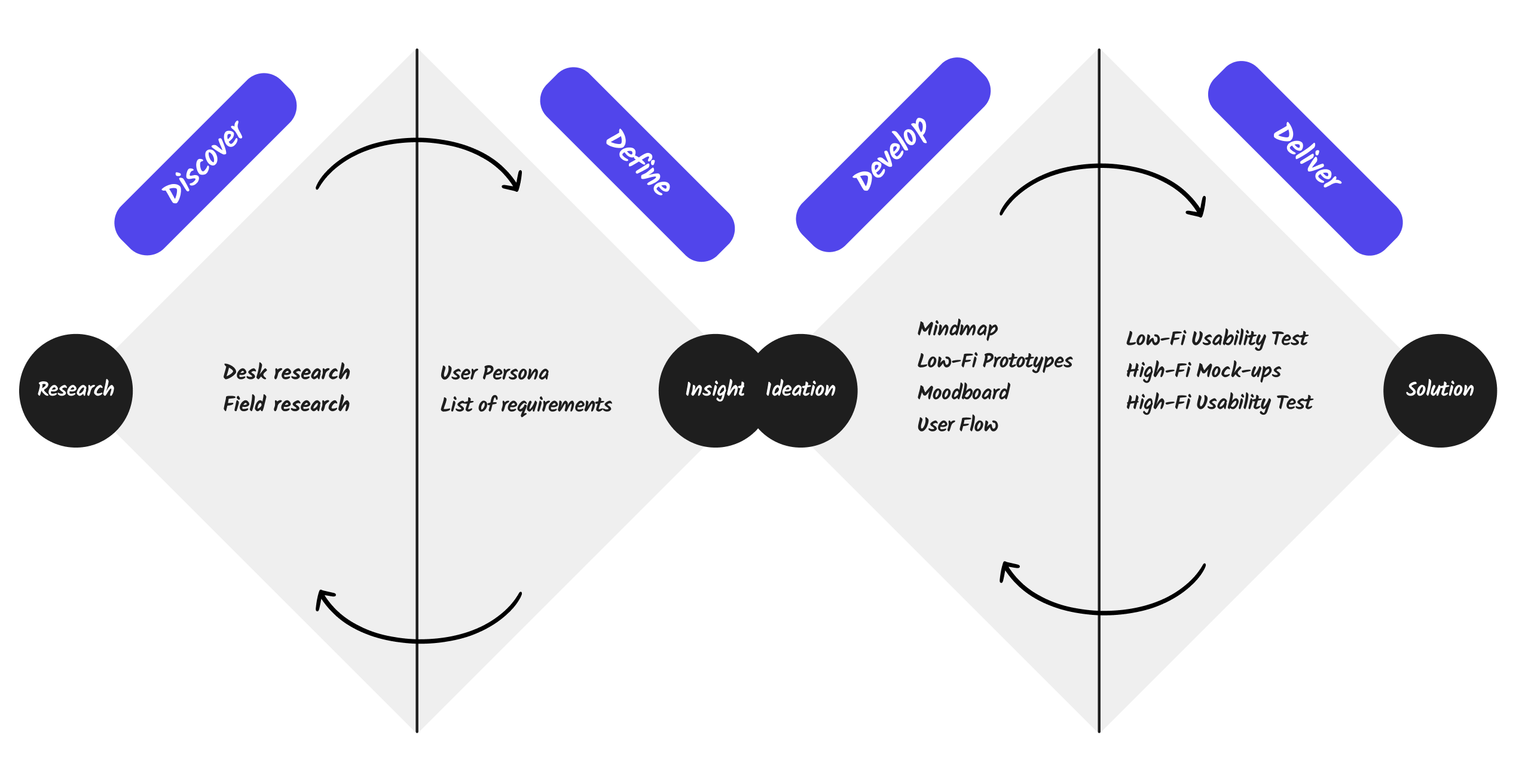
Discover: Research and Analysis
In the Discover phase, we conducted comprehensive user research to understand the pain points and requirements. This involved surveys, interviews, and competitive analysis to gather valuable insights.
Define: Synthesis and Insights
During the Define phase, we synthesized the research findings to identify key insights and problem areas. This step involved creating user personas, journey maps, and defining the project scope.
Develop: Ideation and Prototyping
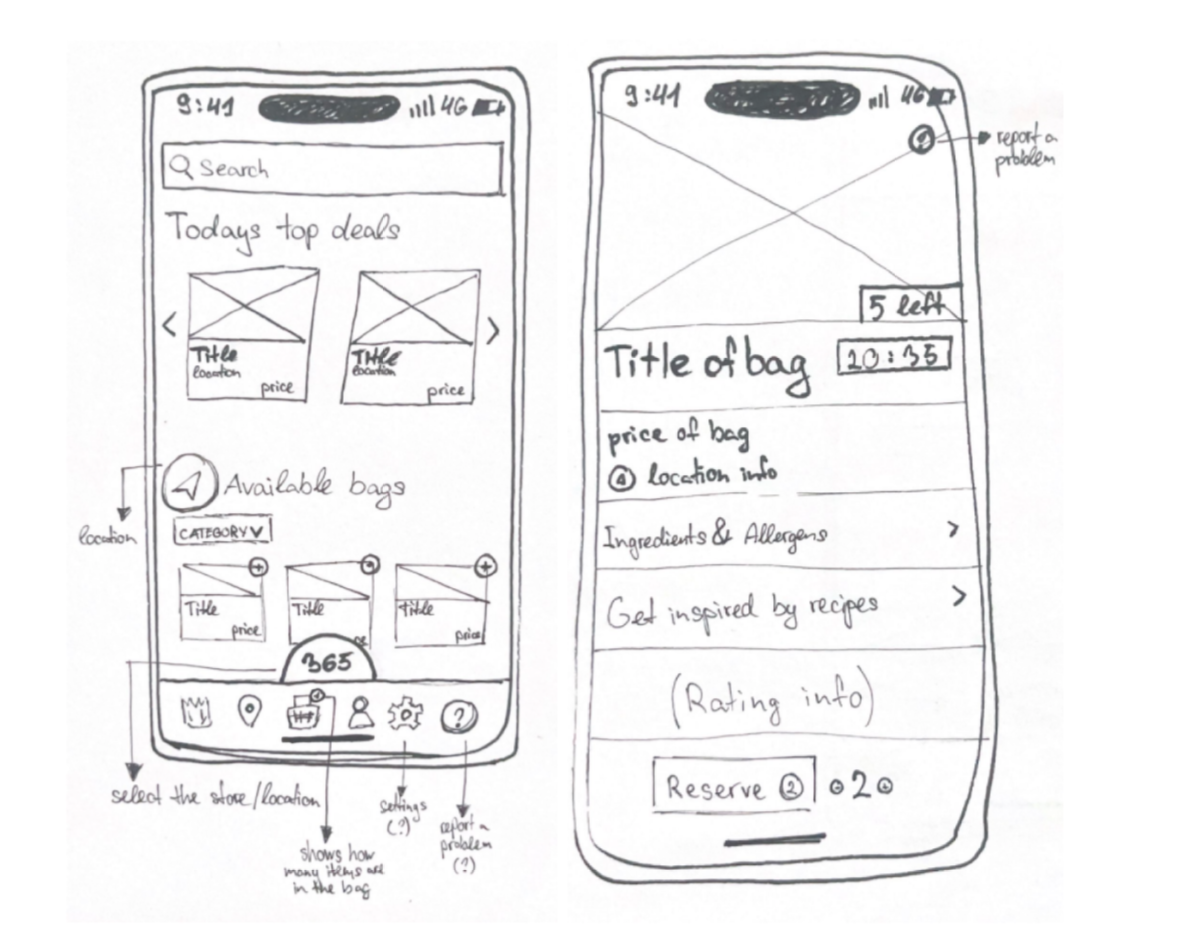
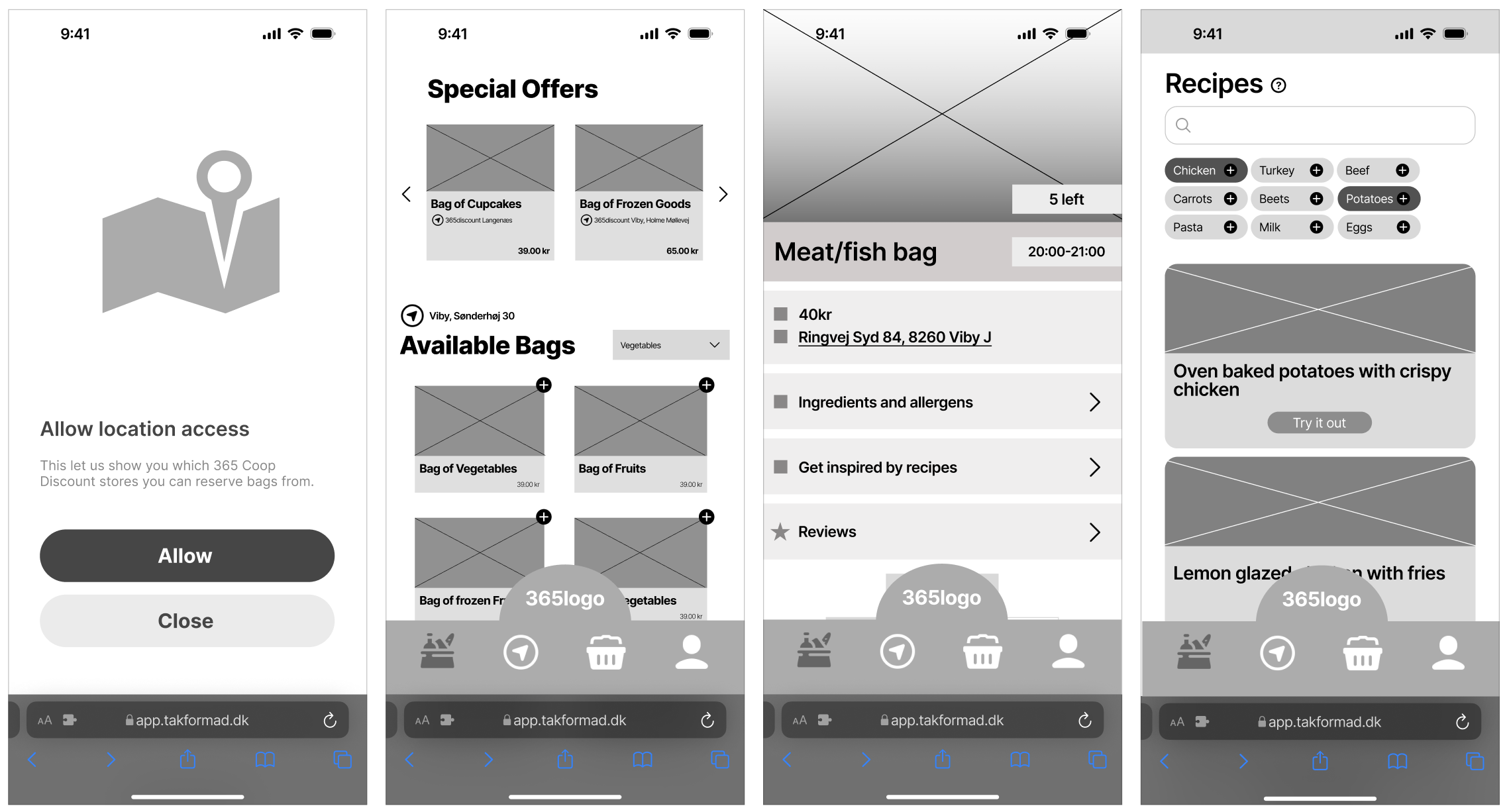
In the Develop phase, we created wireframes and prototypes to visualize the website's structure and functionality. This step allowed for early user feedback and iterative improvements to the design.
Deliver: UI Design and User Testing
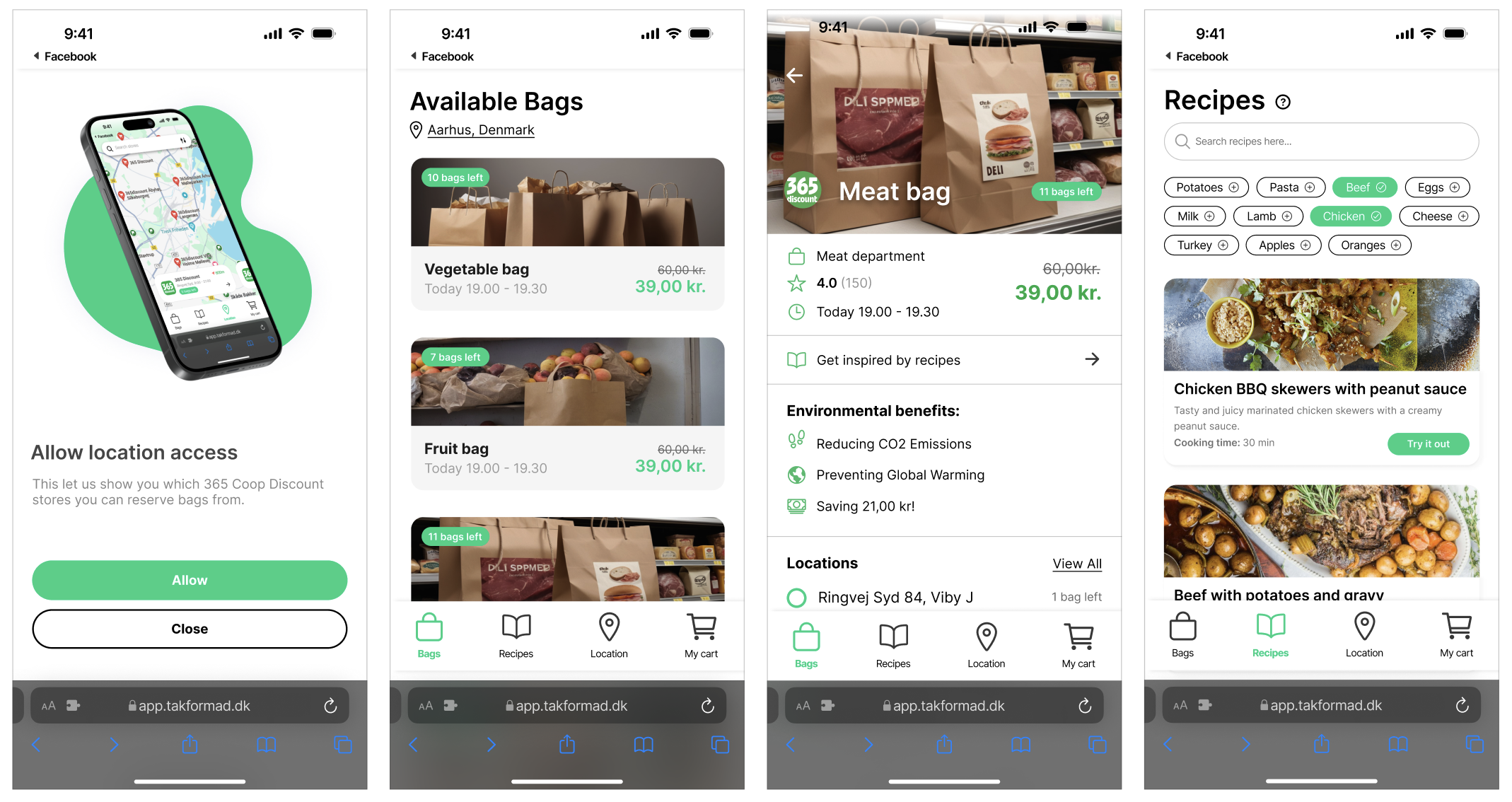
The Deliver phase focused on designing the user interface with a focus on aesthetics and usability. We conducted user testing sessions to validate the design and ensure it meets user expectations before finalizing the product.
Findings
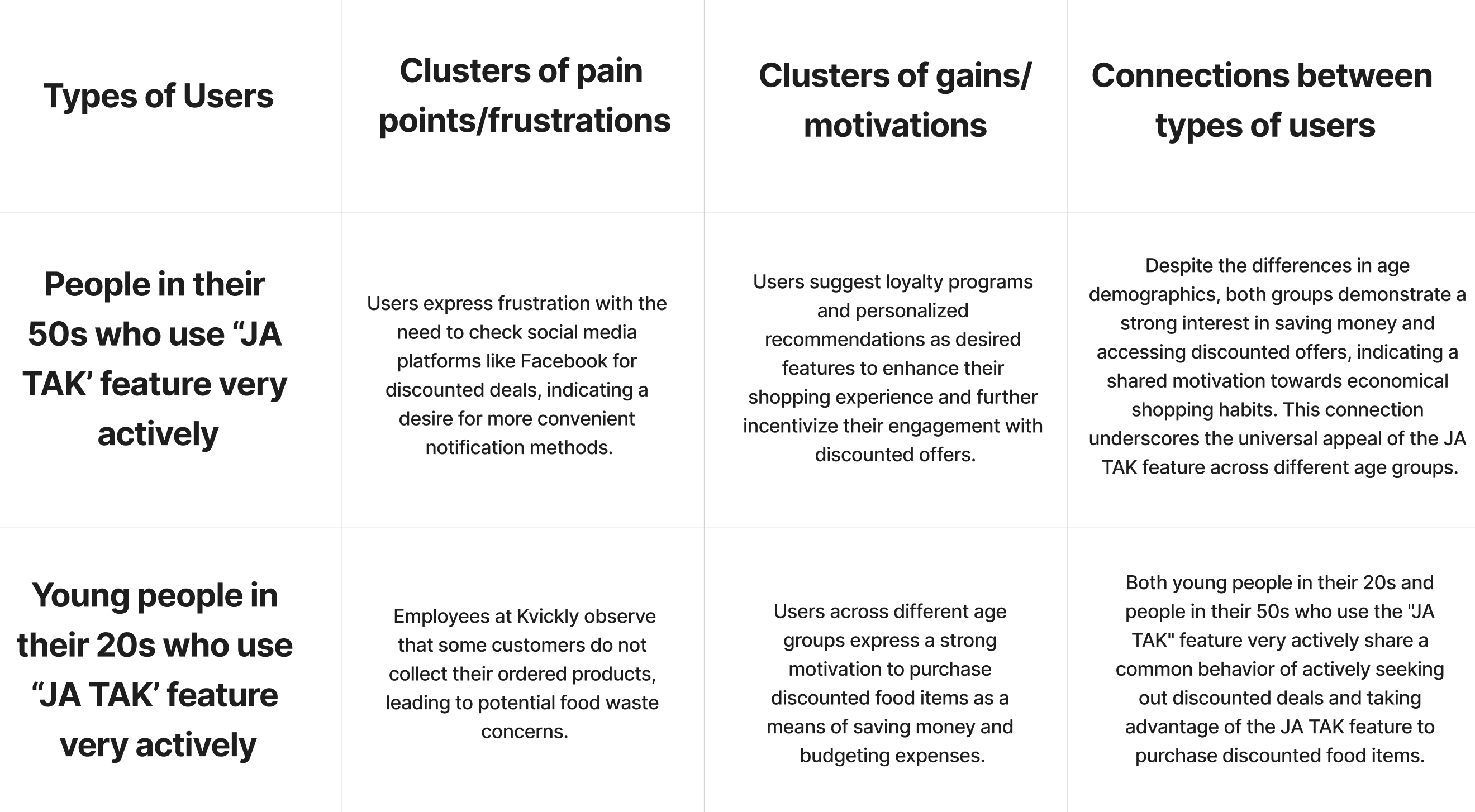
Our research provided valuable insights into how people use "JA TAK" discounts. We organized these insights into different groups using a diagram. This diagram shows what users like, what they find frustrating, and what motivates them. We found different types of users, each with their own habits and preferences when using the discounts. By understanding what frustrates and motivates users, we can better meet their needs and improve their experience with "JA TAK" discounts.
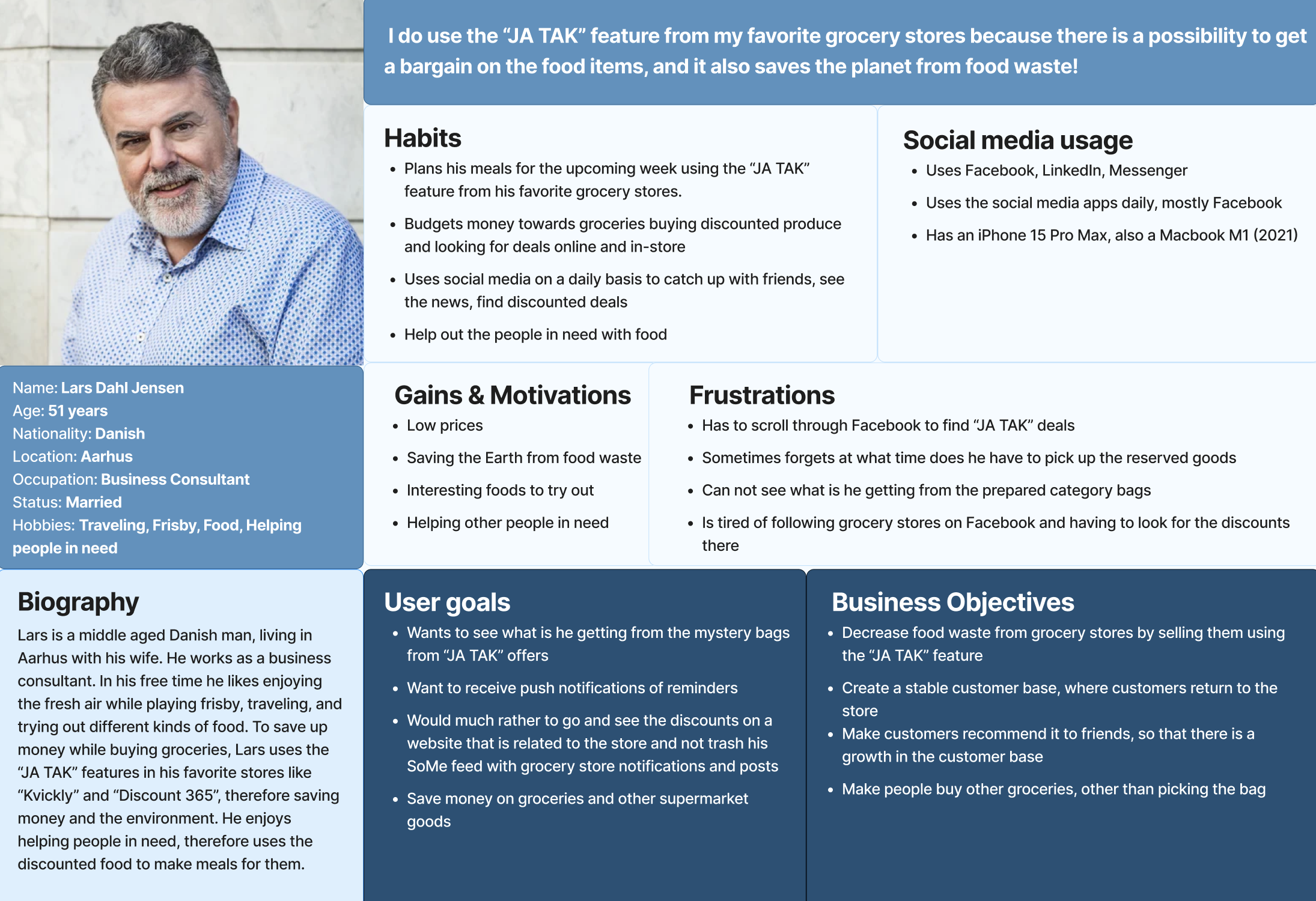
User Persona
Meet Lars Dahl Jensen, a 51-year-old Business Consultant living in Aarhus.
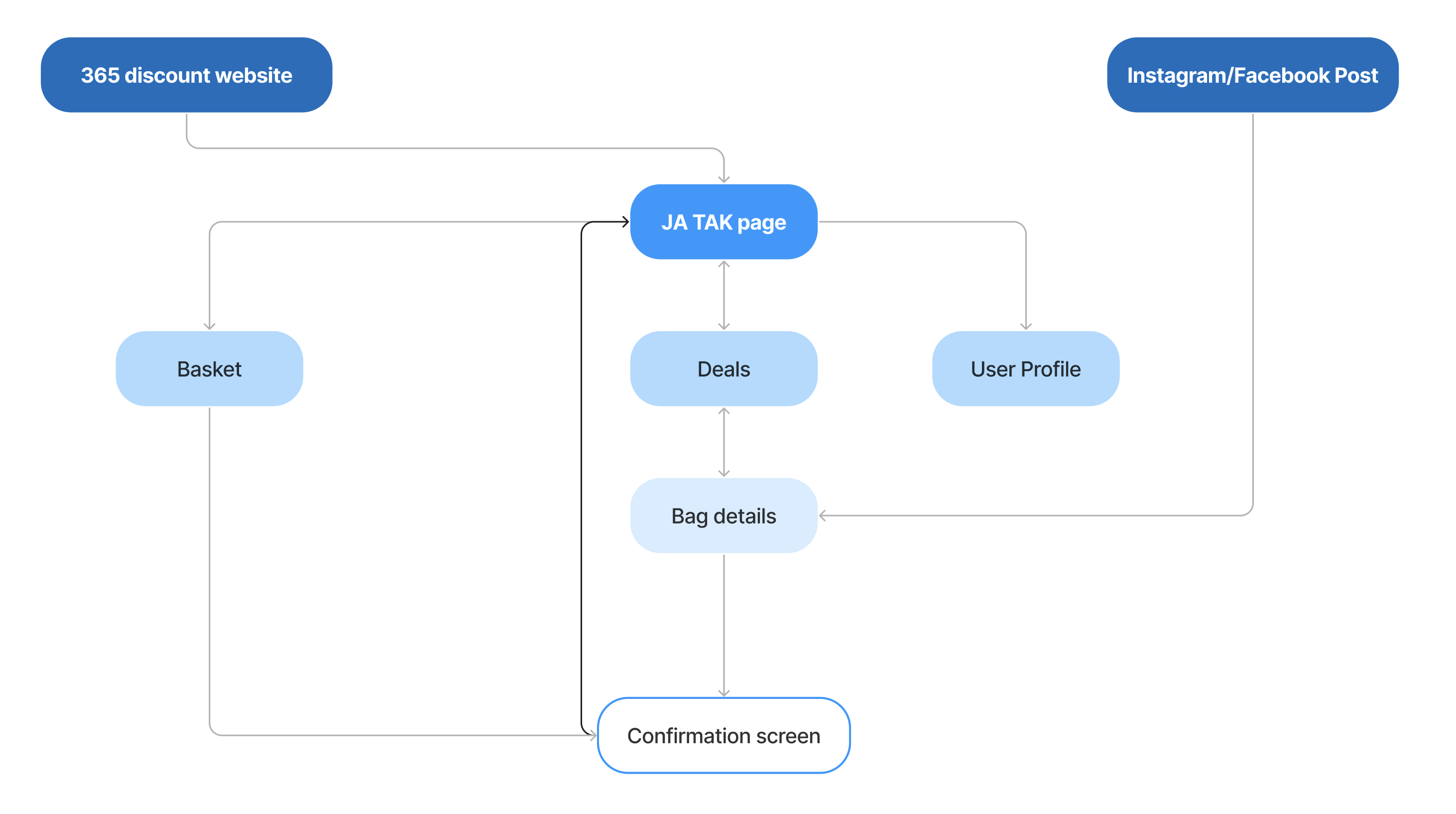
Information Architecture
Sketching
Low-Fidelity Prototypes
High-Fidelity Prototypes
Style Tile
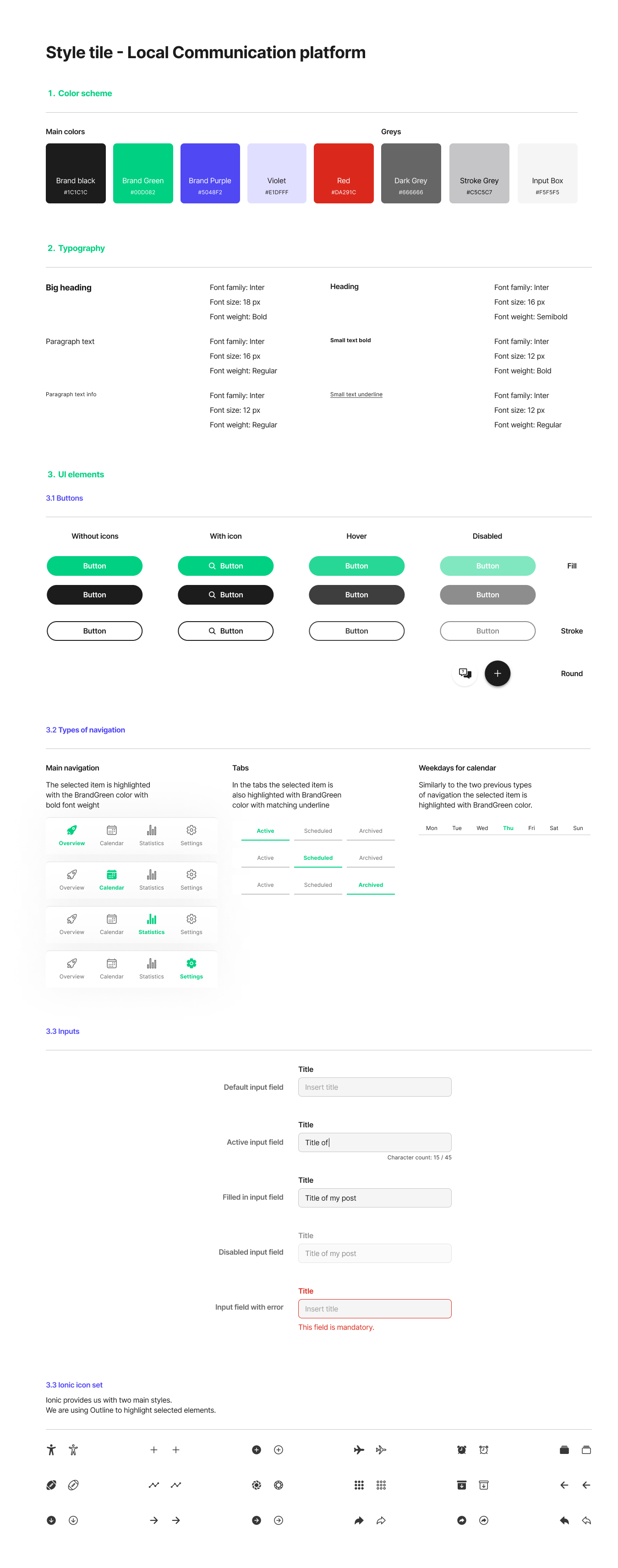
In order to keep the design consistent across different pages and screens, a Style Tile provided by Quick Info was followed. It consists of components such as text style, color palette, buttons, texture, logo, adjectives and icons.
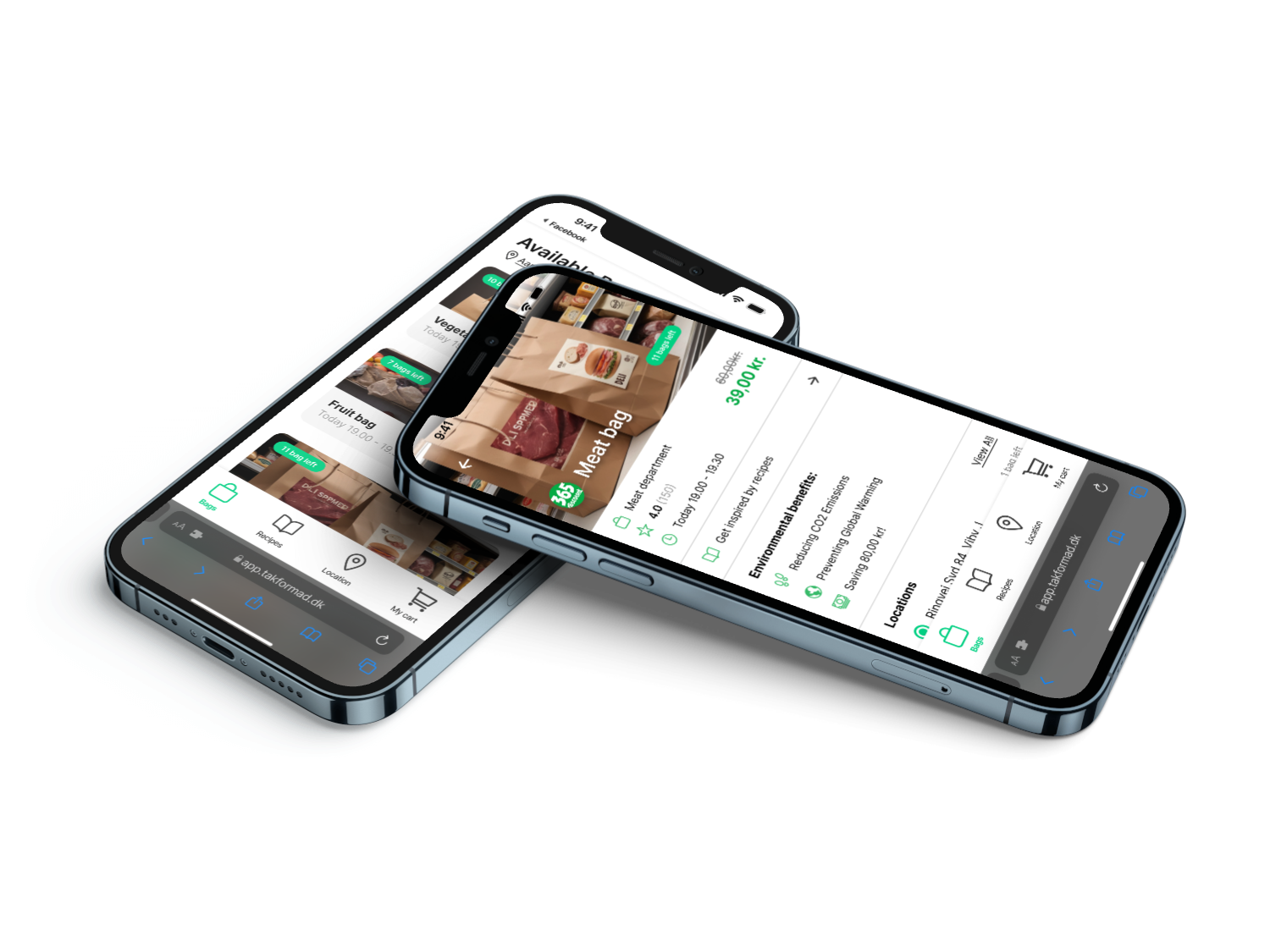
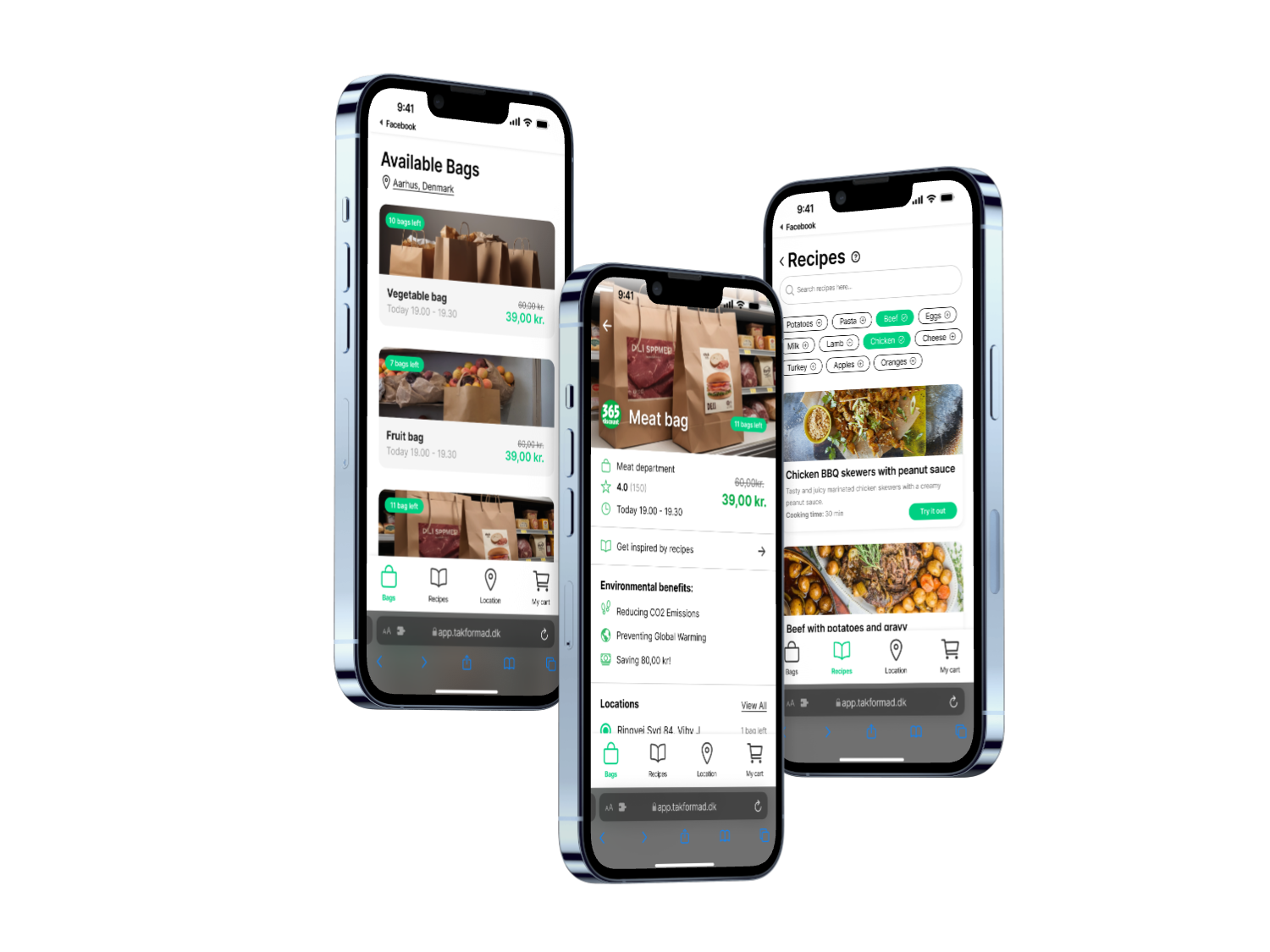
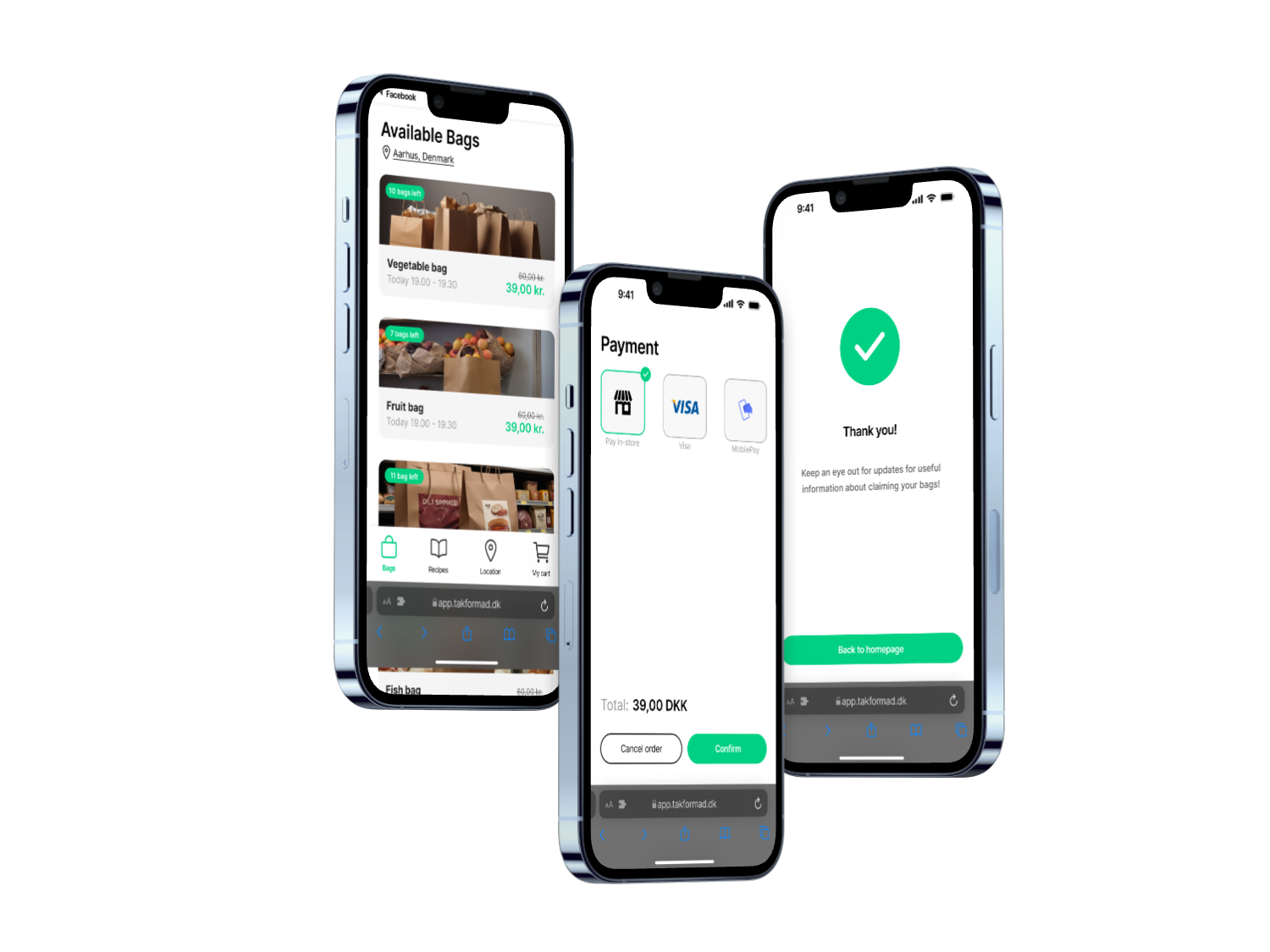
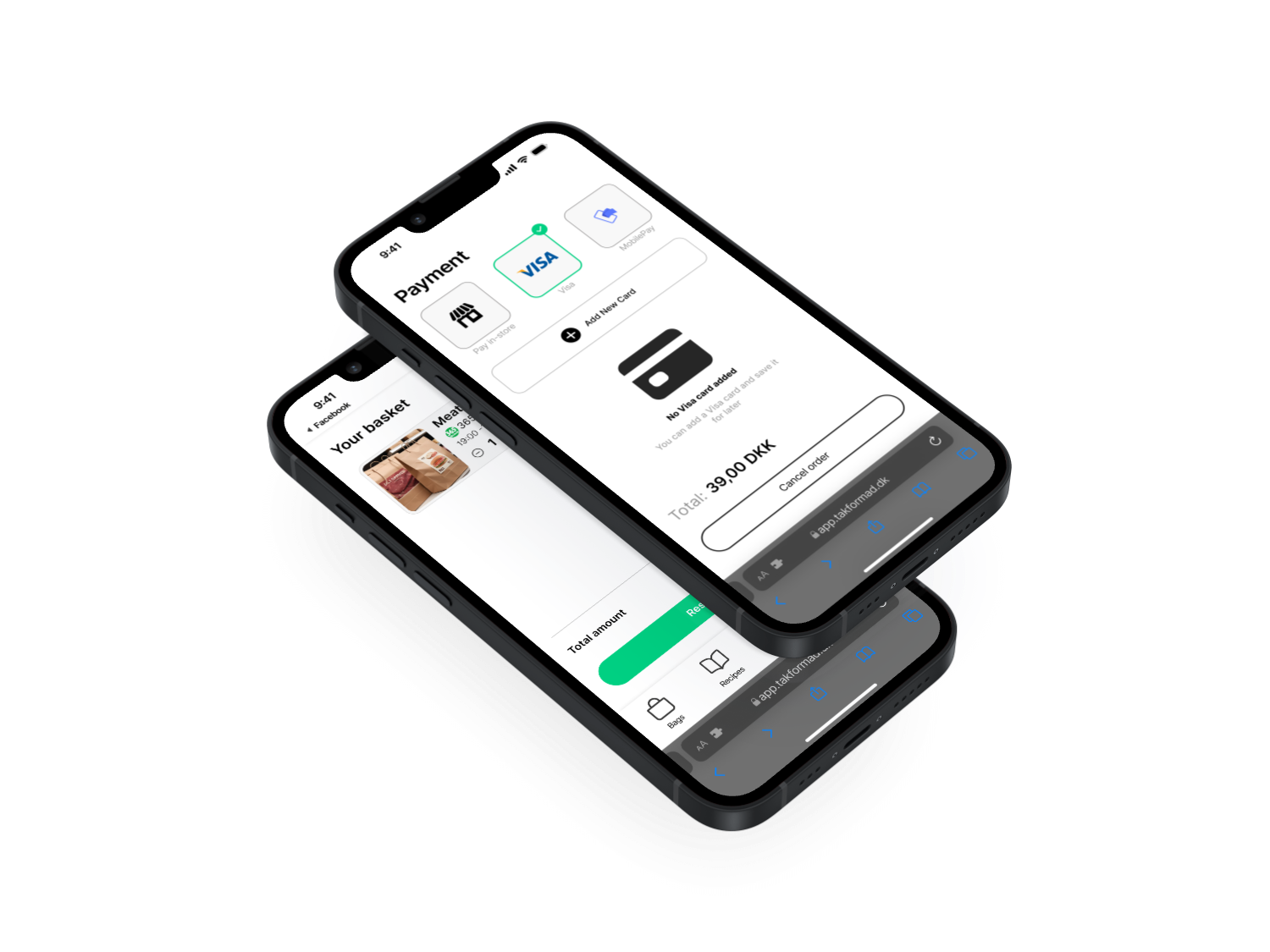
Final Prototype
Testing
We conducted the Gangster test, also known as the Trunk test, to evaluate the usability of our prototype. This involved users navigating the prototype without guidance to simulate real-world use. After incorporating feedback from initial Lo-Fi testing, the second round of testing revealed that users had a better overall opinion of the solution, finding it more intuitive and easier to navigate. This iterative testing process proved effective in enhancing the design, demonstrating the value of user-centered improvements in creating a more user-friendly product.
Conclusion
From idea development to a final Figma solution, this whole project was revolving around potential users and their necessities, wishes and pain points. The key takeaways from the research part showed that participants often share similar gains –following low prices, trying to reduce food waste, and struggle with the same pains – scroll through Facebook to find “JA TAK” deals, forgetting to pick-up their food, tired of following grocery stores on Facebook.
Key Learnings
Streamlined Workflow
This project emphasized the importance of streamlining workflows. By optimizing processes and tools, I enhanced efficiency and project delivery timelines. It's about finding the right gears that make the project engine run smoothly.
Creative Problem-Solving
I enjoyed tackling design challenges head-on, exploring innovative solutions that pushed boundaries. It was about finding unique approaches to meet user needs and enhance their experience with a touch of creativity.
Collaborative Client Engagement
Working closely with clients was enriching. It deepened my understanding of their objectives, fostering a collaborative environment where ideas flowed freely. Building trust and delivering impactful designs together made the journey rewarding.